Congratulations on the arrival of your new family member. The following information is provided to help you with all the necessary health care your new puppy or kitten will require, including worming, vaccination, heartworm prevention, flea control, nutrition, desexing & microchipping.

Cat and Dog Companion

DOGS

Vaccination
To safeguard your Dog from potentially serious and sometimes fatal diseases we recommend vaccinations. Dogs are vaccinated against:

  1. Canine Parvovirus – is a viral gastroenteritis that is highly contagious. Depression, loss of appetite, severe vomiting and diarrhoea containing blood are some of the signs. Without treatment death can occur within 24 hours.
  2. Canine Distemper – Distemper is a highly contagious disease producing signs such as fever, depression, loss of appetite and discharge of pus from the eyes and nose. In severe cases the brain may become affected resulting in convulsions and death. Treatment is often ineffective.
  3. Canine Hepatitis – in puppies Hepatitis can cause sudden death, whilst adult dogs can experience weakness, fever, diarrhoea, loss of appetite, bleeding and acute abdominal pain due to enlargement of the liver. In severe cases death may occur within 24 to 36 hours from onset.
  4. Canine Parainfluenza Virus and Bordetella (Canine Cough) – Signs include a dry hacking cough that often finishes with gagging and persists for several weeks. These are both highly contagious diseases especially in enclosed conditions such as boarding kennels and show rings.

Your puppy will require a course of vaccinations:
6 – 8 weeks First vaccination – Temporary
10 – 12 weeks Booster vaccine
16 weeks Final vaccine
(One week after the 16 week vaccination your puppy can socialise with other dogs or go for walks in the park etc.)

Adult dogs require an annual vaccination booster for life. You will receive a reminder when your dogs yearly vaccination is due.

Heartworm Prevention
Heartworm can affect dogs and is spread by mosquitoes. Dogs affected by heartworm will have an infestation of long thin worms lodged in the heart and vessels that feed on surrounding blood. This interferes with circulation and damages tissues, eventually causing heart failure. Left untreated this can result in the death of your pet.

Heartworm prevention should commence from 10-12 weeks of age with once a month preventative medication. From 12 months of age an annual preparation given by injection can be administered to protect against heartworm. Heartworm prevention is needed for the life of your pet.

Worming
The most common worms that affect dogs in Australia are roundworm, hookworm, tapeworm and whipworm. Worms are a common cause of ill health in pets and can cause signs such as loss of appetite, vomiting, diarrhoea and in severe cases even death.

Puppies should be wormed at 2, 4, 6, 8, 10 and 12 weeks of age, then every month until 6 months old and then every 3 months for life with an allwormer, eg. Drontal tablet or Canex Cube.

Flea Control
Fleas are unfortunately an ever present nuisance to our pets. If they exist in the environment they will find a way onto your dog’s coat.

Fleas can be prevented easily and effectively with a once a month topical solution. All pets in the household need to be treated. Puppies can be given a topical flea treatment as early as 6-8 weeks of age. Our Veterinary Healthcare team can provide you with more information about effective flea control.

Desexing

We recommend all dogs, male and female to be desexed. The optimum age is 5 to 6 months of age when the animal is approaching sexual maturity but before they come on heat.

As well as reducing the number of unwanted pregnancies, desexing prevents pets from roaming, fighting or causing nuisance to neighbours. In females it significantly reduces the risk of uterine and mammary cancer and in males it reduces the risk of cancer of the prostrate gland and testicles. It is also advisable to have a tattoo placed in their ear to indicate that your pet has been desexed.

Microchipping

Microchipping is a permanent form of identification in the form of a tiny chip, which is implanted under the skin. Registration details are kept with Central Animal Records and can be updated by the owner if there is any change in owner details. We would recommended to microchip at the time of desexing.

Nutrition – a healthy diet
Getting the correct nutrition as a puppy is very important. Therefore it is highly recommended to feed a high quality commercially available puppy or growth formula.

We stock several varieties of premium quality dog foods at our hospital. Milk is unnecessary and can cause diarrhoea in those that are lactose intolerant. Clean water must be available at all times.


CATS

What do i need to vaccinate against?

  1. Feline Leukaemia Virus – by attacking the immune system this virus makes cats more susceptible to infection and prone to developing certain cancers. When the virus affects the immune system, cats may become sick or even die from diseases which they have been vaccinated against. Symptoms are non-specific including weight loss, lethargy, and poor health. A blood test can detect if a cat is infected, however there is no treatment for this fatal virus.
  2. Feline Enteritis – Onset of this disease is very rapid and often is fatal. Symptoms include high temperature, loss of appetite, depression, vomiting and diarrhoea.
  3. Feline Respiratory Disease– also known as the ‘cat flu’, causes sneezing, coughing, eye and nose discharge, loss of appetite and sometimes ulcers on the tongue. This can lead to severe dehydration and debilitation which can be fatal.
  4. Feline Immunodeficiency Virus (FIV)– This blood borne viral infection causes Feline AIDS which is potentially fatal. Vaccination is available and will be recommended by our veterinarians if your cat is considered to be at risk. The virus interferes with the immune system, and initial symptoms such as fever, sores, lesions and diarrhoea progress to severe chronic infections as the immune system is overcome. There is no treatment or cure for the virus itself.

Your kitten will require a course of three vaccinations:
8 weeks First Vaccination – Temporary
12 Weeks Booster Vaccination
16 Weeks Final Vaccination
One week after the final vaccination your kitten can go outside and socialise with other cats.

FIV Vaccination requires a course of 3 vaccinations which can be done at 10, 12 & 14 weeks of age or later in life also. Cats vaccinated for FIV after 6 months will require a blood test prior to vaccination

Adult cats require an annual vaccination booster for life. You will receive a reminder when your cat’s yearly vaccination is due.

Desexing

As well as reducing the number of unwanted kittens, desexing prevents pets from roaming, fighting, spraying and night prowling, particularly common in male cats. The optimum time for desexing is 5-6 months of age, when the animal is approaching sexual maturity but before the first ‘heat’ in females. However, it is never too late to desex your cat.

What does desexing involve?
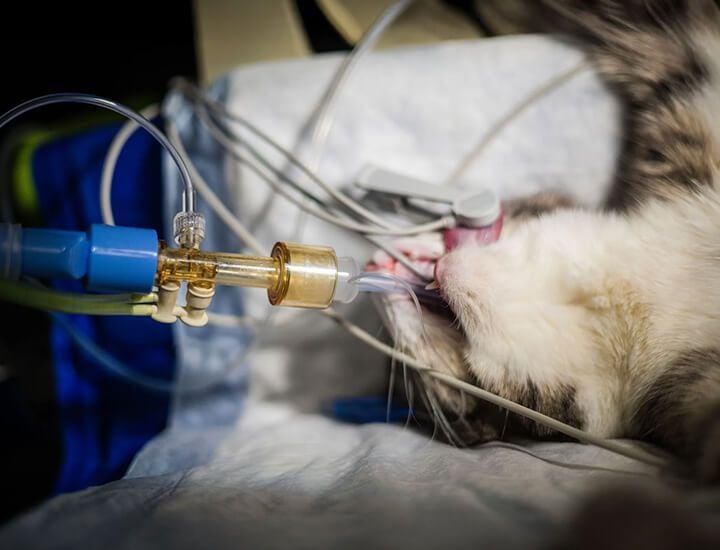
In both females and males desexing is performed under general anaesthesia. Your cat will be admitted in the morning and discharged in the evening of the same day. In females both the ovaries and uterus are removed, in males the testicles are removed.

Worming

The most common worms that affect cats in Australia are roundworm, hookworm, and tapeworm. Worms are a common cause of ill health in pets and can cause symptoms such as loss of appetite, vomiting, diarrhoea and in severe cases even death.

To protect your cat, common worms should be readily controlled with a routine worming treatment. Kittens should be wormed every two weeks until twelve weeks of age, then monthly until six months of age. After six months all cats need to be wormed every three months for effective protection.

Heartworm

A cat affected by Heartworm will have an infestation of long thin worms (up to 30cm in length!) lodged in the heart and vessels that feed on surrounding blood.

Mosquitoes spread heartworm when they bite your pet. There is no approved treatment for feline heartworm disease so prevention is essential to give your cat the best chance of a long and healthy life.

How do I protect my cat from heartworm?
Prevention is possible using a monthly ‘spot-on’ on the skin. Kittens should be started on prevention from 12 weeks of age.

Nutrition

It is very important that cats receive a well balanced diet. The most convenient and reliable way to provide a balanced, palatable diet is to feed high quality prepared cat food both canned and dry.

Cats often prefer to eat several small meals (at room temperature) per day but will do equally as well if fed one meal at the same time each day. Milk is unnecessary and may cause diarrhoea in those which are lactose intolerant. Clean water must be available at all times.

FREE PUPPY AND KITTEN PACKS WHEN YOU VACCINATE WITH US :)

Free Puppy Pack

Contains: Fleaguard, Aloveen Oatmeal Shampoo by Dermcare, Wormer, Toy and Information.

Free Kitten Pack

Contains: Frontline flea control, Toy, Wormer, Information.

GERALDTON & DISTRICTS KENNEL CLUB – Obedience Training for your Puppy or Dog.Hercules is going to Obedience Training

Classes run on Wednesday Nights from 6:30 to 7:30 pm -

Class One:   10/02/10

Class Two:   31/03/2010

Class Three:   26/05/10

Class Four:   14/07/10

Class Five:   01/09/10

Class Six:   20/10/10

Cost: $50 per pet or $55 for Double  for the whole year. Classes held at Woorree Park Complex.

Places are Limited so Bookings are Essential – Contact Serena on 9921 7172 and Angela on 9965 4672