&geometry(180x85) "Midwest Vet Centre")

Accidental Ingestion of Rodenticide
What is rat bait really doing to our pets?
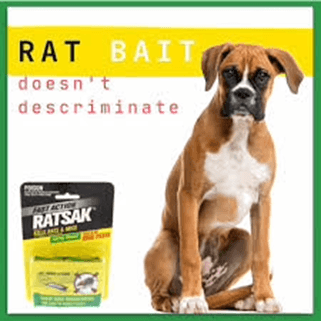
Accidental ingestion of rat or mouse baits (rodenticides) is, unfortunately, a common cause of poisoning in pets. Rodenticides are poisons designed to kill rats and mice, but unfortunately, they are just as incredibly toxic for dogs, cats and other native reptiles and birds. We are seeing a big increase of cases over the past month or two of rodenticide ingestion, so here’s some information about how it affects the body and what to do if your pet has ingested rat bait.
In Australia rat baits come in many different shapes and sizes. Common formulations are pellets and wax blocks, but there are also soft baits, grains and liquid preparations. The most common type of rat bait in Australia is anticoagulants. When ingested these anticoagulants concentrate in the liver where they interfere with the normal synthesis of clotting factors. Anticoagulants exert their effect by interfering with the recycling of vitamin K1 which is an essential ingredient in the production of clotting factors. While anticoagulants are the most common type, there are also cholecalciferol, bromethanlin, zinc and aluminium phosphides which all affect the body in different ways and are all highly dangerous and toxic to pets. Consumption of poisoned rats or mice can also cause toxicity.
Clinical symptoms-
Unfortunately, there are no early clinical signs of ingestion of rodenticides and there is often a delay of about 24 hours or up to 3-7 days post-ingestion before clinical signs develop, (except for zinc and aluminium phosphides). Signs of internal bleeding in the form of clinical symptoms may include:
· Lethargy or weakness
· Pale gums
· Decreased appetite
· Sudden respiratory distress or coughing
· Obvious external signs of haemorrhage (dependent on where the bleeding is; for example, bruising, bloody faeces or urine, nose bleeds, vomiting blood)
· Distended abdomen from bleeding into abdomen
· Sudden death with no obvious clinical signs can also occur
What to do if you think your animal has ingested a rodenticides-
If you suspect that your pet has eaten rat/mice poison, you should seek veterinary care immediately. Inducing vomiting as soon as possible after ingestion will ensure less of the poison to be absorbed and removes the majority of the poison from the gastrointestinal tract, in some cases a gastric lavage may be done as well. Your vet will discuss with you if any further treatment or blood testing is required. If your pet is showing evidence of bleeding/ the clinical signs listed above as a result of consuming the poison, blood testing will be needed to establish the severity of the poisoning. Vitamin K is the antidote to rat bait toxicity but pets in severe cases may need a blood and plasma transfusion, fluid + oxygen therapy and very close monitoring. So please if you think your pet may have ingested a bait it’s best not to wait till signs do show get them medical attention ASAP and try to avoid using baits where possible.